(228) 256-3833

Quick Summary
Most dumpster rental headaches in Harrison County come down to a handful of avoidable mistakes: ordering a size too small, mixing concrete in with household debris, forgetting to clear the driveway before delivery day, tossing banned items in the container, and comparing quotes that are not priced the same way. The Dumpster Guy runs 10, 15, and 20 yard roll-offs plus a dedicated 7.5 yard heavy debris container, all priced per dump instead of per day, so the biggest mistakes are the ones that force a second haul or a rejected load. Here is how to avoid each one before you book.
Ordering the smallest dumpster to save money
The most common mistake is treating the smallest container as the cheapest option. A 10-yard roll-off runs $395 per dump and a 15-yard runs $450, so the gap between them is $55. If you underestimate the job and fill up the 10-yard, you are paying for a second dump at full price, plus the days you lose waiting on a swap.
Homeowners almost always underestimate volume, especially on cleanouts. Closets, attics, and garages hold a lot more than they look like they do, and once furniture goes in, the empty space disappears fast. When you are stuck between two sizes, take the bigger one. A half-empty 15-yard costs less than two trips with a 10-yard, and it keeps your project moving.
- 10-yard, $395 per dump, about 4 pickup-truck loads, best for one room, a garage, or a roofing tear-off
- 15-yard, $450 per dump, about 6 pickup-truck loads, the everyday choice for cleanouts and mid-size remodels
- 20-yard, $495 per dump, about 8 pickup-truck loads, built for whole-house cleanouts and larger renovations
- 7.5-yard heavy debris, $325 per dump, a dedicated container for clean concrete, brick, and masonry
Throwing concrete and dirt in a regular dumpster
Concrete, brick, block, dirt, and roofing shingles weigh several times more per cubic yard than household debris. A 20-yard container loaded with busted-up driveway slab is way heavier than the truck is rated to lift, which is why heavy material goes in its own container instead of getting mixed in with the rest of the job.
That is exactly what the 7.5-yard heavy debris container is for. It is $325 per dump, sized small on purpose so a full load stays legal and liftable, and it takes clean concrete and masonry at a rate a mixed load could never match. If your project makes both kinds of debris, order two containers and keep them separate. Sorting up front is a lot cheaper than a rejected pickup or a load you have to dig back out by hand.
Not knowing what cannot go in the dumpster
Every cleanout turns up something that is not allowed, and finding out on pickup day is the expensive way to learn it. Keep these out of the container: paints and solvents, household chemicals, propane tanks, batteries, tires, electronics, and any appliance holding refrigerant, which means refrigerators, freezers, and window AC units.
None of it is a dead end. Harrison County runs household hazardous waste and electronics collection events, most auto parts stores take used tires and batteries, and appliance stores will usually haul the old unit off when they deliver the new one. If you are not sure about a specific item, ask when you book. It takes thirty seconds and it keeps your pickup from getting flagged.
Skipping delivery day prep
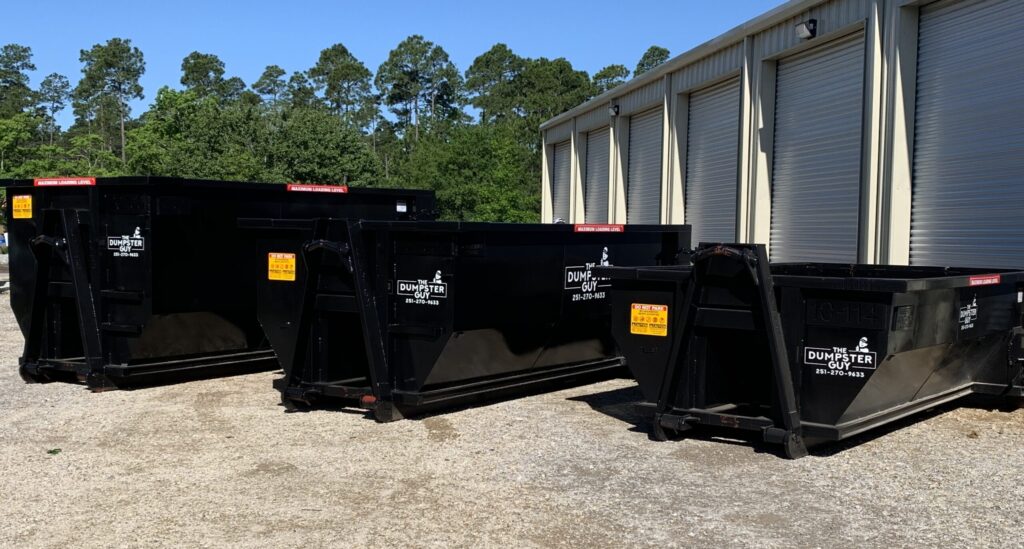
A roll-off truck needs real room to work. The residential containers are 14 feet long and 8 feet wide, and the truck needs about 60 feet of straight clearance to back in and slide the box off, plus open space overhead with no low limbs or power lines in the way.
The fixes take ten minutes. Move both cars out of the driveway the night before, trim anything hanging low over the approach, and pick your spot before the driver shows up instead of deciding while he waits. If your driveway is short, steep, shared, or newly poured, say so when you schedule so the driver can plan the drop, or lay down plywood to spread the weight on soft or delicate surfaces.
- Clear the driveway and about 60 feet of straight approach
- Check for low limbs, gutters, carport overhangs, and utility lines above the drop spot
- Pick the exact placement before the truck shows up, with the door end facing your work area
- Mention soft ground, pavers, or a fresh driveway when you book so the crew can bring boards
Loading the dumpster wrong
How you load the container decides how much actually fits. Flat items like doors, plywood, paneling, and cabinet faces should go in first and lay flat across the floor. Bulky furniture goes next, broken down where you can, and small loose debris fills in the gaps around it. Tossing everything in the order you carry it out is how a 20-yard ends up full at two-thirds capacity.
Two hard rules on the way out. Nothing can stick up above the top rail, because an overfilled container cannot be tarped and cannot legally leave your property. And keep the weight spread out front to back instead of piled at one end, which makes the box a lot easier to load onto the truck.
Comparing quotes that are not priced the same way
A number by itself tells you almost nothing. Some companies quote a low base rate for a short rental window, then add delivery, pickup, fuel, environmental fees, per-day charges after day seven, and a per-ton overage on top. The advertised price and the final invoice end up nowhere near each other.
The Dumpster Guy prices per dump instead of per day, with delivery, pickup, hauling, and disposal built into the quoted number. That difference matters most on jobs that drag out, which is most cleanouts and most renovations. When you compare, ask every company the same three questions: what is included, what triggers an extra charge, and what happens if the project runs long.
Waiting until the last minute to book
Demand on the Mississippi Gulf Coast is not flat. Spring cleanout season, the weeks after a storm, and the end of the month when leases turn over all pull containers off the yard fast. Calling the morning you want a delivery works often enough that people assume it always will, right up until the week it does not.
Give yourself a few days of cushion, especially if your project has a hard deadline like a closing date, a move-out, or a contractor crew scheduled to start demo. If a named storm is in the Gulf, book before it makes landfall instead of after, because that is when every roll-off on the Coast gets spoken for at once.
Assuming you need a permit, or assuming you do not
For the vast majority of jobs in Gulfport, Biloxi, Long Beach, Pass Christian, and the rest of Harrison County, a dumpster sitting on your own driveway or private property needs no permit at all. People talk themselves out of renting over a permit requirement that does not even apply to them.
The exception is real, though. If the container has to sit on a public street or right-of-way because there is no room on the property, check with your city before delivery day. HOA neighborhoods can have their own placement rules too, so those are worth checking if you live in one. Either way, it is a phone call, not a roadblock.
Key Takeaways
- Size up when you are stuck between two. The $55 gap between a 10-yard and a 15-yard is cheaper than a second dump.
- Concrete, brick, and dirt go in the 7.5-yard heavy debris container at $325 per dump, never mixed into a household load.
- Paints, chemicals, propane, batteries, tires, electronics, and refrigerant appliances need a different disposal path.
- Clear the driveway, about 60 feet of approach, and the space overhead before delivery day.
- Load flat items first, keep everything below the top rail, and spread the weight out evenly.
- Compare what is included, not just the headline price. Per-dump pricing beats per-day when a project runs long.
- Book a few days out, and well ahead of a storm, when containers on the Coast disappear fast.
Frequently Asked Questions
What is the most expensive dumpster rental mistake?
Ordering a container that is too small. Filling up a 10-yard on a job that needed a 15-yard means paying for a second dump at full price and losing days to the swap, when sizing up would have cost $55 more up front.
Can I put concrete in a regular dumpster in Harrison County?
No. Concrete, brick, block, and dirt are way too heavy for a standard roll-off. They go in the dedicated 7.5-yard heavy debris container at $325 per dump, which is built and priced for clean masonry material.
How much clearance does the delivery truck need?
About 60 feet of straight approach for a 14-foot container, plus about 8 feet of width and open space overhead with no limbs, gutters, or utility lines in the way. Move vehicles out of the driveway before the truck shows up.
Do I need a permit for a dumpster in Harrison County, MS?
Not if it sits on your own driveway or private property, which covers most jobs. You only need to check with your city if the container has to be placed on a public street or right-of-way.
What happens if I overfill the dumpster?
An overfilled container cannot be tarped and cannot legally leave your property, so the pickup gets delayed until the load is level with the top rail. Keeping everything below the rail avoids a wasted trip entirely.
How far ahead should I book a dumpster on the Gulf Coast?
A few days is usually enough, but give yourself more cushion during spring cleanout season, at the end of the month, and any time a storm is in the Gulf, since containers get booked up quickly in those windows.